Hello friends,
Well, this is our first attempt at Blogging! Forget Twitter, Facebook and MySpace, the Blogosphere is WHERE IT'S AT!!!
If you logged on to Fiona's Blog, you already know that we are preparing to head to St. Louis for Fiona's surgery, a procedure called SDR or Selective Dorsal Rhizotomy. Fi has Cerebral Palsy, a result of the brain bleed that she experienced when she was a preemie in the Neonatal Intensive Care Unit (NICU) seven long years ago. The type of CP that she has is known as Spastic Diplegia. (For all you techie, science nerds out there, here is the detailed 4-1-1 from Wikipedia.)
Spastic diplegia's particular type of brain damage inhibits the proper development of upper motor neuron function, impacting the motor cortex, the basal ganglia and the corticospinal tract. Nerve receptors in the spine leading to affected muscles become unable to properly absorb gamma amino butyric acid, the amino acid that regulates muscle tone. Without GABA absorption to those particular nerve rootlets, affected nerves perpetually fire the message for their corresponding muscles to contract, and the muscles become permanently hypertonic.
This abnormally high muscle tone creates difficulty with voluntary and passive movement, and generally creates stress over time — depending on the severity of the condition in the individual, the constant spasticity ultimately produces pain, muscle/joint breakdown including tendinitis and arthritis, premature physical exhaustion (i.e., becoming physically exhausted even when you internally know that you have more energy than you are able to use), contractures, spasms, and progressively worse misalignments of bone structure around areas of the tightened musculature as years progress.
Officially, CP is not a progressive condition, and indeed it does not clinically "get worse" in the sense that the nerves are damaged at birth and neither recover nor degrade. This is significant because other neuromuscular conditions with similar surface characteristics such as multiple sclerosis are indeed progressive and do get worse over time. But in the case of spastic CP, its non-progressiveness is irrelevant, because the symptoms get worse, and more and more rapidly as the person ages. Therefore it is usually the symptoms, not the cause, that are seen as the issue and are dealt with, except in the case of a rhizotomy.
Like nearly all forms of CP, and unlike any other condition that may present with similar effects, spastic diplegia is entirely congenital in origin — that is, it is acquired shortly before or during a baby's birth process. Things like exposure to toxins, traumatic brain injury, encephalitis, meningitis, drowning or suffocation do not tend to lead to spastic diplegia in particular or even cerebral palsy generally. Overall, the most common cause of spastic diplegia is Periventricular leukomalacia, more commonly known as neonatal asphyxia (a sudden in-womb shortage of oxygen-delivery through the umbilical cord), combined with premature birth, which even by itself runs a risk of the infant developing some type of CP. Additionally, though, circumstances such as Hypoxia of the brain, hematoma in the brain or other birth trauma, or, also, the presence of certain maternal infections during pregnancy such as congenital rubella syndrome, can all lead to spastic diplegia, whether on their own or in some combination of one another.
WHEW! That was a mouthful!!!
OK. So if you really read all that, you will understand that Fiona has too much tone or muscle tension in her lower legs. As she grows, this tension is causing her leg, ankle and feet bones to deform. There are various types of tendon lengthening surgeries that are commonly performed on kids like Fi but these only give temporary relief as they need to be redone as she continues to grow. SDR on the other hand, is a more specialized type of surgical intervention that addresses the root cause or problem of spasticity rather than the symptoms.
So, more science / medical stuff....
About Selective Dorsal Rhizotomy (SDR)
Two groups of nerve roots leave the spinal cord and lie in the spinal canal. The ventral spinal roots send information to the muscle; the dorsal spinal roots transmit sensation from the muscle to the spinal cord.
At the time of the operation, the neurosurgeon divides each of the dorsal roots into 3-5 rootlets and stimulates each rootlet electrically. By examining electromyographic (EMG) responses from muscles in the lower extremities, the surgical team identifies the rootlets that cause spasticity. The abnormal rootlets are selectively cut, leaving the normal rootlets intact. This reduces messages from the muscle, resulting in a better balance of activities of nerve cells in the spinal cord, and thus reduces spasticity.
So, welcome to our journey! We have high hopes for Fiona's future after SDR. Please join us as we take this giant step!


Shaggy Horse Show 2008
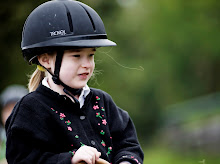
I love hippotherapy!
A Good Homework Night

"M" is for math and M&Ms!
Wyeth

thank you Chris and Doug, Fiona and all of you will always be in our thoughts and prayers.
ReplyDeletecon affetto
Giovanni, Chiara, Italo.
Francesco ha scritto di salutarvi tanto.
Dear precious little Fiona! God be with you - and Mom and Dad! And Madi and Irene and Wyeth! Love, Donna
ReplyDeleteWe're thinking about our little Fiona! I have my favorite picture of her, when she was two, smiling up at me from her high chair while watching Blues Clues and having her "lunch". I know she'll be clapping all the way through her surgery (remember how clapping was the only way to get her to chill out?)
ReplyDeleteWe're with you Fi. Dog is our co-pilot too! Love, Tacoma Davidsons
ReplyDeleteDear Little Miss Sunshine and Family,
ReplyDeleteAll of us at Skyline Elementary are rooting for you. We will be so excited to see you and your happy smile again. Thinking of all of you! Thanks for the blog!
Sue Mosich
Great photos Doug. All the best this morning, we're thinking of you all! Looking forward to your update later. PS: I'll be walking Wyeth tonight.
ReplyDeleteHi Fiona!!
ReplyDeleteIt is Blake...your biggest sis. Looks like you are having some fun! I am so glad to hear it! I just wanted to say that I love you and that I am sending you a huge hug and lots of smooches. I hope you got some good DVDs to watch. When you get home, I will be coming to see you a few days after. I can't wait to see you and snuggle and watch some movies. I have the movie Bolt. I will bring it so we can watch it together! YAY!! Love you!!
Hey Dad and Chris...
I just want to say thank you for raising such wonderful children and being amazing parents. Your strength gives me strength. I love you...and I am thinking and praying for you all. Can't wait to see you...
Love your bestest older daughter, Blake.
P.S...Dad, the pics are amazing as always. But please try to get some sleep. You will need it...
<3
Time is good!!!!! Consultation sounds good too. Have a few schooners Doug, don't just stop at one! Have sent an e mail. Keep jumping around on that bed Fi. Wearing your lovely badge at work!!!!or it's on my work diary for all to see. Mobile thingy trying to work out. May need to send me the text first. Enjoy your day tomorrow, heaps of sunshine, ice cream and running around. Get some freckles Chris! Love to all
ReplyDeleteFixxxxxxxxxx